
Wuthering Heights
When Wuthering Heights first appeared in 1847 under the pen name Ellis Bell, readers were stunned by its dark passions and gothic intensity. This masterpiece, written by Emily Brontë, grips readers with stormy passions, dark drama, and unforgettable characters that have echoed across generations. Emily lived a quiet life on the Yorkshire moors, a secluded world from which she and her sisters carved out an extraordinary legacy. Despite her isolation, her only novel would go on to shape literature forever, standing today as an enduring symbol of passion, rebellion, and the untamed spirit of the moors.
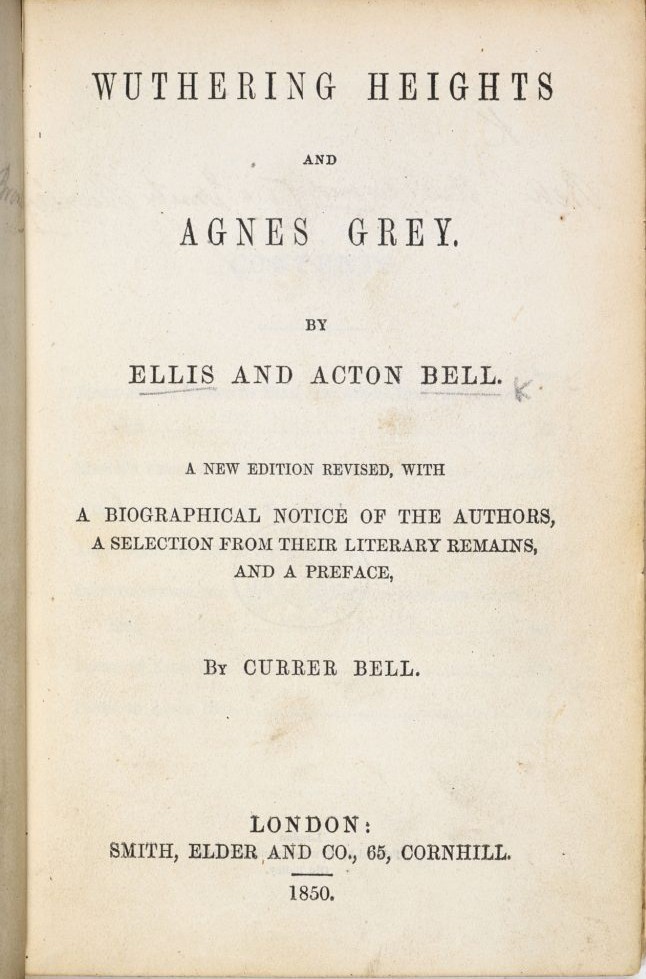
C.71.bb.4
Wuthering Heights and Agnes Grey by Ellis and Acton Bell
Author: Emily Brontë, Anne Brontë, and Charlotte Brontë
1850
Image: From the British Library collection
The novel's history is as intriguing as its plot. Following the initial release, a pivotal moment in literary history occurred with the 1850 edition. This new edition included a biographical notice and a groundbreaking preface by "Currer Bell"—Emily’s sister, Charlotte Brontë. This reveal of their true identities reshaped public understanding of the Brontë sisters, adding a layer of intrigue and empowerment to a narrative already built around legacy and identity. The story itself delves into deep themes of love defying class, nature reflecting emotion, and characters shaped by obsession and fate. At its heart lies the doomed love between Heathcliff and Catherine, encapsulated by the iconic line: "He's more myself than I am. Whatever our souls are made of, his and mine are the same".
Visual interpretations of this classic have further cemented its cultural status. A standout example of visual storytelling is found in the work of Percy Tarrant (1855-1934), whose illustrations accompanied the 1924 edition. Tarrant’s vibrant lithographs offer a visually rich interpretation of Wuthering Heights, blending expressive detail with period authenticity. His work brings Brontë's gothic drama to life, capturing the essence of the novel's emotional depth. Unlike modern film adaptations, which may only echo the original sentiments, these artifacts provide unmatched authenticity and a direct connection to the creative source that shaped generations of art.
The narrative power of Wuthering Heights lies in its ability to take on a life of its own over the decades. While the story has inspired more than 20 film and television adaptations, stage productions, and songs, the original text remains the definitive source of value. It represents an "untamed original," distinct from the derivative nature of screen adaptations which are often constrained by a single filmmaker's lens. The 1850 edition and Tarrant's 1924 illustrations serve as a testament to the longevity of Brontë’s vision, offering a heritage that possesses cultural depth and literary prestige. By revisiting the original manuscripts and illustrations, we engage with the true literary voice that defined the genre of Gothic romance.
About a bit of art
At the delicate intersection of life's poetry and warmth, we construct an aesthetic bridge - a bit of art, a lifestyle brand that reenchants the mundane through artistic reinvention.
In continuous dialogue with the world's premier museums and galleries, we reinterpret art history's iconic moments through a contemporary lens. Mondrian's geometric harmony now dances upon your coffee cup's edge; Hokusai's great wave transforms into soft drapery on home textiles; Matisse's chromatic brilliance awakens in your journal's pages. From collectible art-objects to immersive exhibitions, we translate museum masterpieces into living design - ensuring art never sleeps in glass cases, but breathes within daily rituals.
With a bit of art, ordinary moments become extraordinary encounters. Every day deserves its masterpiece.
0 comments