

Literary Classics
Dracula
Published in 1897, Dracula by Abraham "Bram" Stoker remains the definitive masterpiece of Gothic horror, establishing the archetypal vampire that continues to dominate global pop culture. Stoker, an Irish author and business manager for the Lyceum Theatre, utilized an epistolary format—comprising diary entries, telegrams, and letters—to create a sense of mounting dread and documentary realism.
The narrative follows the journey of Jonathan Harker to the Carpathian Mountains to assist Count Dracula, a centuries-old nobleman seeking to relocate from Transylvania to London. As the Count’s predatory nature is revealed, a small group led by the polymath Abraham Van Helsing must unite to combat this ancient supernatural threat.
Dracula
C.194.a.862
Bram Stoker
1901
Image: From the British Library collection
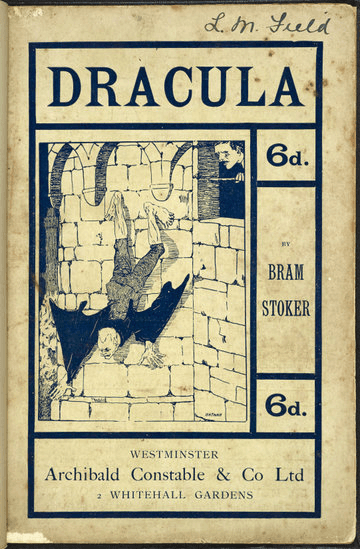
The novel is far more than a simple ghost story; it is a complex cultural artifact that reflects the anxieties of the late Victorian era. It explores themes of modernity versus tradition, the fear of foreign "invasion," and the shifting roles of gender and sexuality. The character of Mina Harker, for instance, embodies a tension between the "New Woman" of the 19th century and traditional Victorian domesticity. The British Library preserves the cultural roots of such literature, holding enormous collections that range from natural science to fairy tales and science fiction. Works of this era, like those of Stoker’s contemporaries Wilde and Dickens, are essential for studying our cultural and historical roots.
The visual legacy of Dracula is equally profound. From the earliest silent films to modern cinematic universes, the Count’s image has been constantly reimagined. While Stoker’s original text focused on a gaunt, demonic figure, subsequent artistic interpretations have leaned into a more sophisticated, aristocratic menace. This enduring public appetite is evidenced by the British Library’s dedication to preserving archival manuscripts and historical editions of literary treasures, which serve as a primary resource for research into every age of written civilization.
About a bit of art
At the delicate intersection of life's poetry and warmth, we construct an aesthetic bridge - a bit of art, a lifestyle brand that reenchants the mundane through artistic reinvention.
In continuous dialogue with the world's premier museums and galleries, we reinterpret art history's iconic moments through a contemporary lens. Mondrian's geometric harmony now dances upon your coffee cup's edge; Hokusai's great wave transforms into soft drapery on home textiles; Matisse's chromatic brilliance awakens in your journal's pages. From collectible art-objects to immersive exhibitions, we translate museum masterpieces into living design - ensuring art never sleeps in glass cases, but breathes within daily rituals.
With a bit of art, ordinary moments become extraordinary encounters. Every day deserves its masterpiece.
0 comments