

Literary Classics
The New Wizard of Oz
In 1900, author L. Frank Baum and illustrator W.W. Denslow embarked on a creative partnership that would redefine children's literature with The Wonderful Wizard of Oz. Seeking to create a distinctly "modernized fairy tale," Baum eschewed the dark, moralizing tones of European folklore in favor of a narrative driven by wonder and the uniquely American spirit. The story of Dorothy Gale, swept from the gray prairies of Kansas to the vibrant Land of Oz, became an instant cultural phenomenon, but the original text offers a richness often overshadowed by the 1939 Technicolor film.
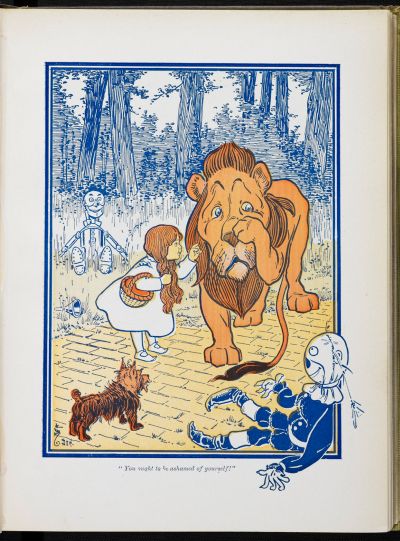
Central to the book's initial success was its revolutionary design. Baum and Denslow were co-creators in the truest sense, with Denslow’s illustrations woven intimately into the text rather than serving as mere decoration. The book featured 24 colour plates and over 100 monochromatic illustrations that changed colour according to the location in the story—Kansas was depicted in sepia, the land of the Munchkins in blue, and the Emerald City in brilliant green. This visual storytelling was unprecedented at the turn of the century and remains a high-water mark for bibliographic design. Denslow's style, characterized by bold lines and a playful, almost Art Nouveau influence, gave the characters a distinct visual identity that predates the Hollywood interpretation.
The narrative itself holds surprises for those only familiar with the screen adaptation. In Baum’s original vision, Dorothy wears Silver Shoes, not ruby slippers—a detail lost to the demands of early colour cinema but crucial to the book’s lore. The journey along the Yellow Brick Road is also more extensive, featuring encounters with the delicate China Country and the ferocious Kalidahs. The characters of the Scarecrow, Tin Woodman, and Cowardly Lion are more philosophical, engaging in debates that reveal they already possess the qualities they seek. This masterpiece stands today not just as a story for children, but as a sophisticated artifact of American graphic design and storytelling.
The New Wizard of Oz - opposite page 66 M00008-34
12813.tt.15
Author: Lyman Frank Baum
Illustrator: W. W. Denslow
1906
Image: From the British Library collection
About a bit of art
At the delicate intersection of life's poetry and warmth, we construct an aesthetic bridge - a bit of art, a lifestyle brand that reenchants the mundane through artistic reinvention.
In continuous dialogue with the world's premier museums and galleries, we reinterpret art history's iconic moments through a contemporary lens. Mondrian's geometric harmony now dances upon your coffee cup's edge; Hokusai's great wave transforms into soft drapery on home textiles; Matisse's chromatic brilliance awakens in your journal's pages. From collectible art-objects to immersive exhibitions, we translate museum masterpieces into living design - ensuring art never sleeps in glass cases, but breathes within daily rituals.
With a bit of art, ordinary moments become extraordinary encounters. Every day deserves its masterpiece.
0 comments